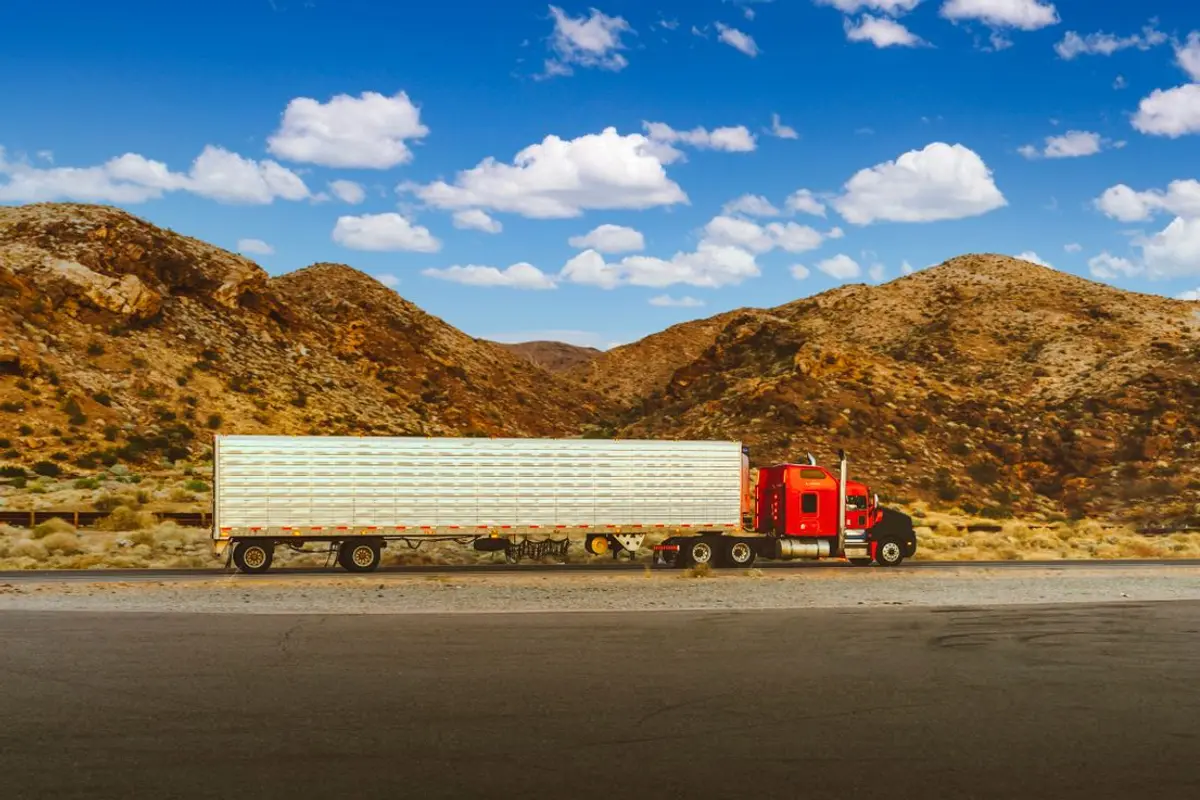
Average truck accident settlements
The average truck accident settlement runs $25,000 to $350,000, reaching $2,000,000 or more where there is surgery or lasting impairment.
A collision with an 80,000-pound commercial vehicle is a fundamentally different claim from a car accident, and not only because the injuries are worse. Commercial carriers hold liability policies starting at $750,000 and often reaching several million, which means the money exists to pay a full-value claim — and the defense investment scales to match.
Typical low end
$25,000
Typical high end
$350,000
Severe / surgical
$2,000,000
Ranges are editorial estimates built from published verdict and settlement research. Every claim is different, and nothing here is legal advice or a prediction of outcome.
What makes a truck accident claim different
Trucking companies dispatch rapid-response investigators to serious crash scenes within hours, sometimes before the injured person has left the emergency room. That team photographs the scene, interviews the driver, and begins building a defense while your evidence is still on the roadway.
The countervailing advantage is that federal regulation creates a paper trail cars never generate: hours-of-service logs, electronic logging device data, driver qualification files, maintenance records, drug and alcohol testing, and cargo securement documentation. Every one of those is a place a violation can surface — and every one of them has a retention period after which it can lawfully be destroyed.
The quick version
- ~5,000fatal large-truck crashes annuallyFMCSA
- $750Kfederal minimum liability coverage for general freightFMCSA
- 80,000 lbmaximum legal weight vs. ~4,000 lb for a carFederal Bridge Formula
Truck Accident settlement amounts by severity
A range is only useful if you know which end you are on. These bands are what separates them.
| Severity | Typical range | What puts a claim here |
|---|---|---|
| Treated and released | $8,333 – $25,000 | An ER visit or urgent care, a few weeks of follow-up, and a full recovery. Insurers resolve these fast and price them off the medical bill almost mechanically. |
| Extended treatment | $25,000 – $350,000 | Months of physical therapy, imaging that shows something objective, and documented time away from work. This is where most truck accidents land, and where negotiation actually matters. |
| Surgery or permanent impairment | $350,000 – $2,000,000+ | An operation, a permanent restriction in writing, or future care your doctor will testify to. Available insurance, not injury severity, is usually what caps these. |
How truck accidents happen
The cause determines who is liable and which evidence matters. Tap any card to open it.
Who is liable, and how fault is decided
Liability is the whole claim. Everything downstream — the number, the timeline, whether it settles at all — follows from this.
Compare fault rules by stateTruck cases usually have more than one defendant. The driver may be liable for negligence, the motor carrier for its own hiring and supervision decisions and vicariously for the driver, the trailer owner for maintenance, the shipper for loading, and a parts manufacturer for a defective component. Each defendant brings a separate policy, and stacking them is how truck claims reach the values they do.
The federal safety regulations do work that ordinary negligence law cannot. Where a car accident case argues about what a reasonable driver would have done, a truck case can point to a specific rule and a specific breach. Juries respond very differently to a rule violation than to a judgment call.
This is also why a preservation letter matters more here than in any other claim type. Sent early, it puts the carrier on formal notice to retain logs, telematics, dashcam footage, and the vehicle itself. Sent late, the records may already be gone under lawful retention schedules — and the case is dramatically weaker.
Injuries we see most in truck accidents
Each links to what that specific injury settles for nationally and in your state.






The evidence that decides a truck accident claim
Most of this is free, and most of it stops being available within weeks. Work down the list in order.
- 1A spoliation and preservation letter to the carrier, sent as early as possible
- 2The DOT number and carrier name from the cab door, photographed at the scene
- 3Electronic logging device and hours-of-service records
- 4Driver qualification file, medical certification, and testing records
- 5Maintenance, inspection, and repair history for the tractor and trailer
- 6Cargo manifest, bill of lading, and weight tickets
Four mistakes that cost the most
Every one of these is common, reversible before it happens, and permanent afterward.
Truck Accident claims by state
Filing deadlines, fault rules, and settlement climate vary enough that the same crash is worth very different amounts in different places.
Alabama
2-year deadline
Alaska
2-year deadline
Arizona
2-year deadline
Arkansas
3-year deadline
California
2-year deadline
Colorado
3-year deadline
Connecticut
2-year deadline
Delaware
2-year deadline
District of Columbia
3-year deadline
Florida
2-year deadline
Georgia
2-year deadline
Hawaii
2-year deadline
Idaho
2-year deadline
Illinois
2-year deadline
Indiana
2-year deadline
Iowa
2-year deadline
Kansas
2-year deadline
Kentucky
2-year deadline
Louisiana
2-year deadline
Maine
6-year deadline
Maryland
3-year deadline
Massachusetts
3-year deadline
Michigan
3-year deadline
Minnesota
6-year deadline
Mississippi
3-year deadline
Missouri
5-year deadline
Montana
3-year deadline
Nebraska
4-year deadline
Nevada
2-year deadline
New Hampshire
3-year deadline
New Jersey
2-year deadline
New Mexico
3-year deadline
New York
3-year deadline
North Carolina
3-year deadline
North Dakota
6-year deadline
Ohio
2-year deadline
Oklahoma
2-year deadline
Oregon
2-year deadline
Pennsylvania
2-year deadline
Rhode Island
3-year deadline
South Carolina
3-year deadline
South Dakota
3-year deadline
Tennessee
1-year deadline
Texas
2-year deadline
Utah
4-year deadline
Vermont
3-year deadline
Virginia
2-year deadline
Washington
3-year deadline
West Virginia
2-year deadline
Wisconsin
3-year deadline
Wyoming
4-year deadline
Truck Accident questions people actually ask
Why are truck accident settlements higher than car accident settlements?
Three reasons compound: the injuries are more severe because of mass differential, the available insurance is far larger, and federal regulations give clear violations to point at. A crash that produces a $30,000 car claim can produce a several-hundred-thousand-dollar truck claim on the same facts.
Who can be held responsible in a truck accident?
Often several parties at once: the driver, the motor carrier, the trailer owner, the company that loaded the cargo, a maintenance contractor, and sometimes a parts manufacturer. Identifying all of them early is what determines the total recoverable pool.
How quickly does trucking evidence disappear?
Some electronic logging data is only required to be retained for six months. Dashcam footage on many systems overwrites within days to weeks. A preservation letter in the first days after the crash is the single highest-leverage action available.
What insurance do commercial trucks carry?
Federal minimums start at $750,000 for general freight and rise to $5,000,000 for certain hazardous materials. Many national carriers carry layered coverage well above the minimum.
How long does a truck accident case take?
Longer than a car claim — commonly a year to three years, because of the volume of records, the number of defendants, and the near-certainty of litigation. Settlements often come after depositions rather than before.
Find out what your truck accident claim is worth
Sixty seconds, no cost, and no obligation to do anything with the number. You will see a range built from your treatment, your fault picture, and your state’s rules — right here, without leaving the page.
Estimated range
1/6 answered
Other accident types

Car Accident
$3K – $55K

Motorcycle Accident
$20K – $200K

Pedestrian Accident
$25K – $250K

Bicycle Accident
$15K – $150K

Rideshare Accident
$10K – $120K

Slip and Fall
$5K – $60K

Workplace Injury
$5K – $75K

Dog Bite
$15K – $60K

Medical Malpractice
$50K – $500K
Product Liability
$25K – $250K

Nursing Home Abuse
$30K – $300K
Electric Scooter Accident
$10K – $75K
Falling Object Injury
$15K – $150K