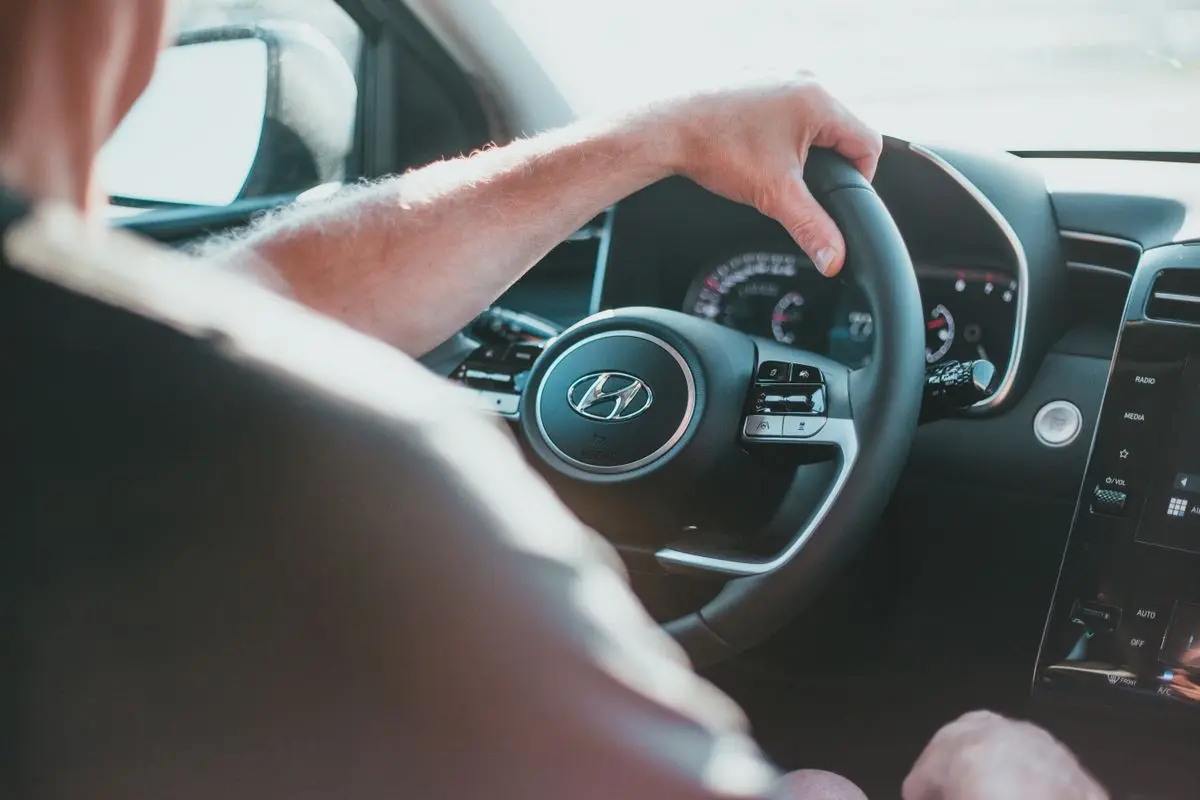
Average rideshare accident settlements
The average rideshare accident settlement runs $10,000 to $120,000, reaching $750,000 or more where there is surgery or lasting impairment.
Rideshare claims look like ordinary car accident claims until you ask which insurance applies, and then they become a question about what the driver's app was doing at the exact moment of impact. Uber and Lyft both maintain large contingent liability policies, but coverage steps up and down through defined phases, and the difference between phases can be nearly a million dollars.
Typical low end
$10,000
Typical high end
$120,000
Severe / surgical
$750,000
Ranges are editorial estimates built from published verdict and settlement research. Every claim is different, and nothing here is legal advice or a prediction of outcome.
What makes a rideshare accident claim different
When the app is off, the driver is a private motorist and only their personal auto policy applies. When the app is on and waiting for a request, a limited contingent policy applies — commonly around $50,000 per person. Once a ride is accepted and until the passenger is dropped off, a $1,000,000 third-party liability policy is in force.
This matters to everyone involved, not just passengers. A driver in another car, a pedestrian, or a cyclist struck by a rideshare vehicle in the middle of an active trip reaches that same $1,000,000 policy. Establishing app status is therefore the first and most valuable investigative step in the claim.
The quick version
- $1Mthird-party liability coverage during an active tripUber / Lyft published policies
- 3 phasesof coverage: app off, app on waiting, ride acceptedPlatform insurance terms
- Mostpersonal auto policies exclude commercial rideshare useStandard policy exclusions
Rideshare Accident settlement amounts by severity
A range is only useful if you know which end you are on. These bands are what separates them.
| Severity | Typical range | What puts a claim here |
|---|---|---|
| Treated and released | $3,333 – $10,000 | An ER visit or urgent care, a few weeks of follow-up, and a full recovery. Insurers resolve these fast and price them off the medical bill almost mechanically. |
| Extended treatment | $10,000 – $120,000 | Months of physical therapy, imaging that shows something objective, and documented time away from work. This is where most rideshare accidents land, and where negotiation actually matters. |
| Surgery or permanent impairment | $120,000 – $750,000+ | An operation, a permanent restriction in writing, or future care your doctor will testify to. Available insurance, not injury severity, is usually what caps these. |
How rideshare accidents happen
The cause determines who is liable and which evidence matters. Tap any card to open it.
Who is liable, and how fault is decided
Liability is the whole claim. Everything downstream — the number, the timeline, whether it settles at all — follows from this.
Compare fault rules by stateAs a rideshare passenger you are almost never at fault, which removes the comparative negligence fight entirely and makes the claim about damages and coverage. If your driver caused the crash, the platform's $1,000,000 policy responds. If another driver caused it, you claim against that driver first, and the platform's uninsured and underinsured motorist coverage fills the gap when their limits fall short.
The phase question is where these claims are won or lost. Trip records, app logs, and the driver's own account establish whether the app was off, on and waiting, or on an active trip. Requesting a trip receipt and preserving the in-app record early is straightforward and decisive.
Platforms classify drivers as independent contractors, which limits direct claims against the company itself in most cases. That classification is contested in various jurisdictions, but as a practical matter the contingent policy — not a corporate negligence theory — is what pays.
Injuries we see most in rideshare accidents
Each links to what that specific injury settles for nationally and in your state.





The evidence that decides a rideshare accident claim
Most of this is free, and most of it stops being available within weeks. Work down the list in order.
- 1Screenshot of the trip in the app, including driver name, vehicle, and timestamps
- 2The trip receipt emailed after the ride
- 3Report the crash through the app's safety flow, which creates a dated record
- 4Photographs of the vehicle showing the rideshare decal
- 5The police report identifying the vehicle's commercial use
- 6Your own UM/UIM declarations page, which may stack on top
Four mistakes that cost the most
Every one of these is common, reversible before it happens, and permanent afterward.
Rideshare Accident claims by state
Filing deadlines, fault rules, and settlement climate vary enough that the same crash is worth very different amounts in different places.
Alabama
2-year deadline
Alaska
2-year deadline
Arizona
2-year deadline
Arkansas
3-year deadline
California
2-year deadline
Colorado
3-year deadline
Connecticut
2-year deadline
Delaware
2-year deadline
District of Columbia
3-year deadline
Florida
2-year deadline
Georgia
2-year deadline
Hawaii
2-year deadline
Idaho
2-year deadline
Illinois
2-year deadline
Indiana
2-year deadline
Iowa
2-year deadline
Kansas
2-year deadline
Kentucky
2-year deadline
Louisiana
2-year deadline
Maine
6-year deadline
Maryland
3-year deadline
Massachusetts
3-year deadline
Michigan
3-year deadline
Minnesota
6-year deadline
Mississippi
3-year deadline
Missouri
5-year deadline
Montana
3-year deadline
Nebraska
4-year deadline
Nevada
2-year deadline
New Hampshire
3-year deadline
New Jersey
2-year deadline
New Mexico
3-year deadline
New York
3-year deadline
North Carolina
3-year deadline
North Dakota
6-year deadline
Ohio
2-year deadline
Oklahoma
2-year deadline
Oregon
2-year deadline
Pennsylvania
2-year deadline
Rhode Island
3-year deadline
South Carolina
3-year deadline
South Dakota
3-year deadline
Tennessee
1-year deadline
Texas
2-year deadline
Utah
4-year deadline
Vermont
3-year deadline
Virginia
2-year deadline
Washington
3-year deadline
West Virginia
2-year deadline
Wisconsin
3-year deadline
Wyoming
4-year deadline
Rideshare Accident questions people actually ask
How much insurance does Uber or Lyft carry?
Up to $1,000,000 in third-party liability while a ride is accepted or in progress, plus uninsured and underinsured motorist coverage. While the app is on but no ride is accepted, a much smaller contingent policy applies — commonly $50,000 per person and $100,000 per accident.
I was a passenger — do I have a claim if the other driver caused it?
Yes. You claim against the at-fault driver's policy, and if their limits do not cover your damages, the platform's underinsured motorist coverage can respond. As a passenger you carry no comparative fault.
What if I was hit by a rideshare driver while in my own car?
You reach the same coverage the passenger would. If the driver was on an active trip, the $1,000,000 policy applies to you as a third party.
Should I report the crash through the app?
Yes. It creates a timestamped record tied to the trip and starts the claim with the platform's carrier. Report the facts, and avoid characterizing your injuries before you have been evaluated.
Can I sue Uber or Lyft directly?
Usually not, because drivers are classified as independent contractors. The practical path to recovery is the contingent liability policy, which is where the money is in any event.
Find out what your rideshare accident claim is worth
Sixty seconds, no cost, and no obligation to do anything with the number. You will see a range built from your treatment, your fault picture, and your state’s rules — right here, without leaving the page.
Estimated range
1/6 answered
Other accident types

Car Accident
$3K – $55K

Truck Accident
$25K – $350K

Motorcycle Accident
$20K – $200K

Pedestrian Accident
$25K – $250K

Bicycle Accident
$15K – $150K

Slip and Fall
$5K – $60K

Workplace Injury
$5K – $75K

Dog Bite
$15K – $60K

Medical Malpractice
$50K – $500K
Product Liability
$25K – $250K

Nursing Home Abuse
$30K – $300K
Electric Scooter Accident
$10K – $75K
Falling Object Injury
$15K – $150K