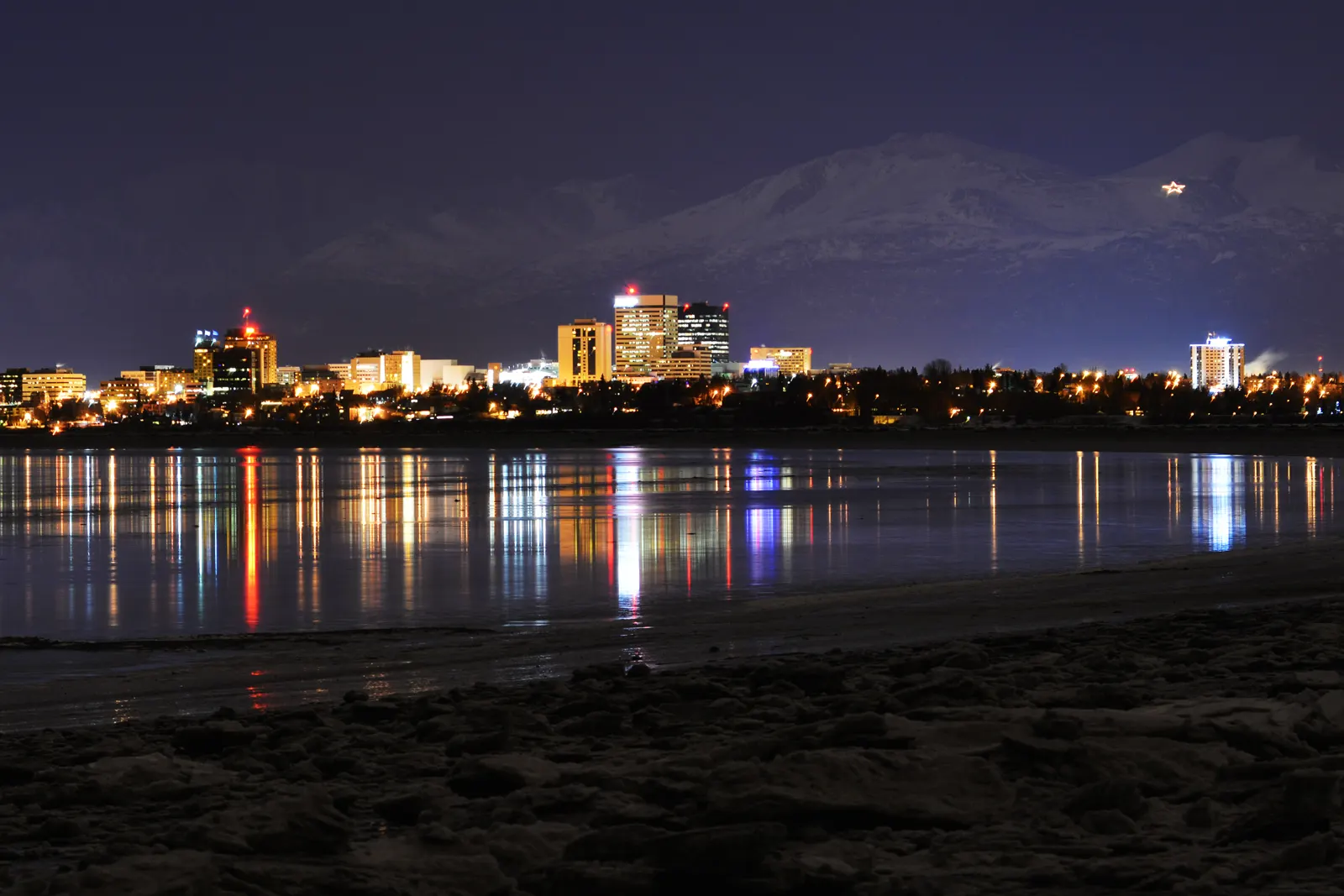
Average traumatic brain injury settlement in Alaska
Typical AK range (2026)
$100K – $1.1M
Severe cases can reach $10.5 million or more. Alaska settlements trend above the national average.
Moderate and severe TBIs change who a person is — cognition, personality, employability. Settlements reflect lifetime care and lost earnings, and typically require neurologist and economist expert testimony to prove full value.
How a traumatic brain injury claim actually works in Alaska
Alaska is an at-fault state using pure comparative negligence — the most claimant-favorable fault rule available, meaning your damages are reduced by your percentage of fault but never wiped out entirely, even if you were mostly to blame.
Alaska requires higher minimum liability coverage than most states — $50,000 per person and $100,000 per accident — which reflects the state's higher medical costs and the reality that a badly injured claimant in Anchorage or Fairbanks is often flown to Seattle for definitive care.
Distance is a real factor in Alaska claims: crashes on the highway system far from a hospital frequently involve air ambulance transport, and those bills alone can run into six figures before any other treatment begins.
Alaska rules that shape your claim
Filing deadline
2 years
You generally have 2 years from the accident date to file a lawsuit in Alaska.
Fault rule
Pure comparative negligence
Alaska uses pure comparative negligence: your recovery is reduced by your share of fault, but it is never barred outright.
Minimum liability coverage
$50K / $100K
Many Alaska drivers carry only the minimum — a key reason to check your own underinsured-motorist coverage.
Uninsured motorist coverage
Optional
Alaska does not require UM, which is why so many traumatic brain injury claims stall at the at-fault driver's minimum limits. Read your own declarations page anyway; most people carry it without realising.
Claim climate
Alaska pairs some of the highest minimum liability limits in the country with some of the highest medical costs, and long distances to definitive care mean air ambulance bills appear in claims far more often than elsewhere.
Fault math, worked through
25% at fault on a $1.1M claim pays $788K
Suppose a traumatic brain injury claim in Alaska is worth $1.1 million on the facts. Found 25% responsible, you recover $787,500. Alaska applies pure comparative negligence, so there is no cutoff — even a claimant found 80% at fault still recovers 20% of their damages. Fault still costs you money proportionally, but it never eliminates the claim.
A typical AK traumatic brain injury claim is worth more than the minimum policy that has to pay it
Alaska requires drivers to carry $50K per person. A traumatic brain injury claim in the typical Alaska range tops out around $1.1 million. That is $1 million of value with no policy behind it if the at-fault driver bought the legal minimum — and a severe case at $10.5 million leaves $10.4 million unreachable. This is why the first question worth asking is not what the claim is worth but what coverage exists, and why the answer often turns on your own policy rather than theirs.
| Where the money comes from | Available | What decides it |
|---|---|---|
| At-fault driver's liability policyRuns out first | $50K minimum | Alaska's legal floor per injured person ($50K / $100K). Many drivers carry exactly this and nothing more. |
| Your uninsured / underinsured motorist coverage | Optional | Alaska does not require it. Check your declarations page anyway; a large share of drivers carry it without knowing, and on a claim this size it is frequently the difference between the policy limit and the actual value. |
| Your medical payments coverage | If purchased | MedPay is optional in Alaska and usually small, but it pays bills during treatment without waiting for the claim and without regard to fault. |
| Commercial, employer or umbrella policy | Case-specific | If the at-fault driver was working, driving a company vehicle, or delivering, a commercial policy with far higher limits usually sits behind them. On a traumatic brain injury claim worth $1.1M or more this is the single most valuable thing to establish early. |
The clock
Alaska's 2-year deadline against a traumatic brain injury timeline
A traumatic brain injury claim commonly takes 24 to 48 months from the date of injury to a signed release, because it cannot be valued until treatment plateaus. Alaska gives you 2 years — 24 months — to file suit. Those two numbers overlap, which means a AK traumatic brain injury claim that is still in treatment as the deadline approaches has to be filed to stay alive, whether or not anyone is ready to litigate it. Filing is a preservation step, not an escalation; the negotiation usually continues afterwards.
Every Alaska deadline that can end your claim
The headline statute of limitations is rarely the deadline people actually miss.
| Deadline | Window | Why it matters |
|---|---|---|
| Personal injury lawsuit | 2 years from the crash | AS § 09.10.070. |
| Claim against the state or a municipality | Notice generally required within months, not years | Alaska's government claims statutes move much faster than the general two-year deadline — treat any crash involving a state or municipal vehicle as time-sensitive. |
What surprises Alaska claimants
Rules that are specific to Alaska and routinely catch people who assumed the national norm applied.
Air ambulance bills change the settlement math
A single medevac flight from a remote highway crash can cost more than the entire minimum liability policy, which is a major reason underinsured motorist coverage matters so much in Alaska.
Pure comparative fault protects you even when you share blame
Being found 60% at fault in most states ends the claim. In Alaska you would still recover 40% of your damages — a meaningful difference in a state where icy-road, low-visibility crashes often produce genuinely mixed fault.
Seasonal road conditions shape liability fights
Black ice, moose collisions, and short winter daylight all feed into fault arguments that don't come up the same way in lower-48 claims — insurers will lean on 'known hazard' arguments if you were driving a familiar route.
Traumatic Brain Injury settlement bands in Alaska
National severity bands adjusted for Alaska's cost of care and verdict climate. Find the row that matches your own treatment.
| Severity | What it looks like | Typical range |
|---|---|---|
| Moderate TBI, good recovery | Loss of consciousness, abnormal imaging, substantial recovery with residual cognitive complaints. | $105K–$420K |
| Moderate TBI, permanent deficit | Documented lasting cognitive and executive-function deficits requiring workplace accommodation or a career change. | $368K–$1.6M |
| Severe TBI, partial independence | Extended coma or post-traumatic amnesia, permanent impairment, supervision needed for complex tasks. | $1.6M–$6.3M |
| Catastrophic TBI | Permanent loss of independence, 24-hour care, no return to any employment. | $5.3M–$21M |
Educational ranges compiled from published settlement and verdict reporting. Not a valuation of any specific claim.
Where a AK traumatic brain injury claim outgrows the minimum policy
Alaska's minimum liability coverage is $50K per person. Reading down this ladder, a traumatic brain injury claim clears that figure at the “Moderate TBI, good recovery” band — so anyone whose treatment has reached that stage is no longer negotiating over what the claim is worth so much as over where the money is going to come from. Every band on this ladder sits above that figure, so a minimum-limits policy cannot pay a AK traumatic brain injury claim at any severity.
Moderate TBI, good recovery
$100K–$425K
Claim value passes the state minimum here
Loss of consciousness, abnormal imaging, substantial recovery with residual cognitive complaints.
Moderate TBI, permanent deficit
$375K–$1.6M
Documented lasting cognitive and executive-function deficits requiring workplace accommodation or a career change.
Severe TBI, partial independence
$1.6M–$6.3M
Extended coma or post-traumatic amnesia, permanent impairment, supervision needed for complex tasks.
Catastrophic TBI
$5.3M–$21M
Permanent loss of independence, 24-hour care, no return to any employment.
How treatment moves a AK traumatic brain injury claim
Two to four years. Recovery typically plateaus between 12 and 24 months post-injury, and no credible permanent valuation exists before that point.
Acute imaging and Glasgow Coma Scale scoring
The initial GCS score and imaging findings classify severity and anchor the entire claim's framing.
Inpatient neurorehabilitation
Documents both the depth of the deficit and the intensity of care required, with cost to match.
Serial neuropsychological testing
Repeat testing over time shows the trajectory — what recovered and what did not. A single test is a snapshot; a series is proof of permanence.
Vocational and economic assessment
Translates cognitive deficits into a lost-earning-capacity number, which in working-age claimants is usually the largest component.
Life-care plan
Where supervision or attendant care is needed, this projects decades of cost and drives the claim into eight figures.
Proving a traumatic brain injury claim in Alaska
Emergency records with Glasgow Coma Scale scores and imaging
Serial neuropsychological testing showing the recovery plateau
Pre-injury school, military, or employment records establishing baseline
Statements from family, friends, and coworkers describing observed change
Vocational expert and economist reports quantifying lost capacity
What traumatic brain injury compensation in Alaska is made of
The $100K–$1.1M figure above is a total. These are the parts it is a total of, and which of them you have to document yourself.
Medical bills, at the billed amount
Every traumatic brain injury demand starts with the total your providers billed — not what a health plan negotiated it down to, and not what you were left owing at the counter. The cost of the same course of treatment runs above the national average in Alaska, which is part of why the AK range sits where it does. The bills that get missed are the ones with no claim behind them: the urgent care visit you paid cash for, the brace, the mileage to twenty physical therapy appointments.
Income you already lost, and income you will
Wages you have missed are the straightforward half — a payroll record proves them. Earning capacity is the contested half: what the traumatic brain injury costs you in the years after the file closes. A AK traumatic brain injury claim takes 24 to 48 months to value largely because that answer does not exist until a physician will put a lasting restriction in writing. Self-employed claimants carry the heaviest burden here, because there is no employer to write the letter.
Pain and suffering — the line with no receipt
Everything above has a document behind it. This does not, and on a $1.1 million traumatic brain injury settlement it is usually the largest single component. Adjusters build it with a multiplier applied to the medical total or a per-diem rate for each day of documented recovery. Neither is law; both are anchors. The multiplier moves with objective findings — imaging, surgery, a specialist's written restriction — which is why two claimants with near-identical bills settle for very different numbers.
What the figure does not include
Vehicle or property damage settles on a separate track and does not raise the injury number, so accepting that cheque early costs you nothing. Nor does the range above assume you claimed household help, childcare you had to pay for while you could not lift, or the prescriptions you filled without submitting. Those are recoverable and routinely go unclaimed, because nobody keeps receipts for a bad month.
Traumatic Brain Injury in Alaska: the questions people ask
The questions people actually search for on this topic, answered in full.
How much is a traumatic brain injury settlement worth in Alaska?
Typical traumatic brain injury claims in Alaska run $100,000 to $1.1 million, with severe cases reaching $10.5 million or more. Alaska settlements track close to national norms. Your own number depends on treatment, permanence, fault, and the insurance actually available.
How long do I have to file a traumatic brain injury claim in Alaska?
Alaska gives you 2 years from the date of the crash to file a personal injury lawsuit. Other deadlines run shorter — claim against the state or a municipality (Notice generally required within months, not years). Missing the applicable deadline ends the claim regardless of how strong it is.
What happens to my traumatic brain injury claim if I was partly at fault in Alaska?
Alaska uses pure comparative negligence: your recovery is reduced by your share of fault, but it is never barred outright. Suppose a traumatic brain injury claim in Alaska is worth $1.1 million on the facts. Found 25% responsible, you recover $787,500. Alaska applies pure comparative negligence, so there is no cutoff — even a claimant found 80% at fault still recovers 20% of their damages. Fault still costs you money proportionally, but it never eliminates the claim.
Who pays my medical bills after a traumatic brain injury in Alaska?
Alaska has no mandatory personal injury protection, so there is no automatic source of payment while the claim is pending. Your health insurance, medical payments coverage if you carry it, or a provider treating on a lien typically covers the bills, and each of those is then repaid from the settlement. That reimbursement is why the gross settlement figure and what actually reaches you are two very different numbers.
Is the minimum insurance in Alaska enough to cover a traumatic brain injury?
Alaska's minimum bodily injury liability is $50K / $100K. A traumatic brain injury claim in the typical range of $100,000 to $1.1 million can exhaust that coverage outright, which is why your own underinsured motorist coverage is often what determines whether a serious traumatic brain injury is fully paid.
What will the insurance company argue about my traumatic brain injury claim?
Defense neuropsychologists administer performance-validity tests designed to suggest exaggeration. Genuine fatigue, pain medication, and depression can all depress scores on these measures, and a competent treating neuropsychologist will address that directly in the report. In Alaska that argument lands inside a pure comparative negligence system, so how much it costs you depends on the fault percentage the adjuster can support.
How long does a traumatic brain injury claim take to settle in Alaska?
Two to four years. Recovery typically plateaus between 12 and 24 months post-injury, and no credible permanent valuation exists before that point. Alaska's 2-year filing deadline sets the outer limit on negotiation — once it passes, the claim is over, so a case that is still being negotiated as the deadline approaches usually has to be filed to preserve it.
Do I need a Alaska lawyer for a traumatic brain injury claim?
At the values a traumatic brain injury claim reaches in Alaska — commonly $100,000 to $1.1 million — most claimants net more with representation even after the contingency fee, because these claims involve permanence arguments, lien negotiation, and often more insurance than one policy.
What if the driver who hurt me in Alaska only had minimum insurance?
Alaska's minimum is $50K per injured person, and a traumatic brain injury claim in the typical range reaches about $1.1 million — so a minimum policy runs out before the claim does. What happens next depends on layers the at-fault driver does not control: your own underinsured motorist coverage, a commercial or employer policy if they were working, and occasionally a second at-fault party. A claim that appears capped at $50K is often not, and finding that out is work done in the first weeks, not at settlement.
How much of a traumatic brain injury settlement do I actually keep in Alaska?
On a $1.1 million settlement — the top of the typical Alaska range for this injury — a one-third contingency fee, roughly 4% in case expenses and around 15% in medical liens leave about $500,500. The fee is fixed by the agreement you sign; the lien figure is not. Negotiating providers, a health plan or a Medicare conditional payment down is the one line on that list that moves, and every dollar it moves reaches you in full.
How long does a traumatic brain injury claim take in Alaska, and can it outlast the deadline?
A traumatic brain injury claim usually takes 24 to 48 months, because it cannot be valued until treatment plateaus and a doctor will say so in writing. Alaska allows 24 months to file suit. Those windows overlap, so a AK traumatic brain injury claim still in treatment near the deadline has to be filed to survive — a preservation step that does not stop the negotiation.
Is the average traumatic brain injury payout in Alaska what I should expect?
An average describes a population, not your file. The $100,000 to $1.1 million band covers AK claims that differ in the three ways that decide a payout: how much treatment the records actually document, whether liability is contested, and how much insurance stands behind the person at fault. A claim at the bottom of that band and one at the top are usually the same injury with different paperwork. The useful thing to do with an average is work out which end of it your own file currently supports, and what would move it.
What a $1.1M AK traumatic brain injury settlement actually pays you
Gross settlement figures are not take-home figures. Running the standard deductions against the top of the typical Alaska range for a traumatic brain injury shows the gap, and shows where the recoverable money is — which is almost never the fee.
| Gross settlement | $1.1 million | Top of the typical traumatic brain injury range in Alaska. A severe or surgical case runs well above this. |
|---|---|---|
| Attorney fee (33%) | − $350,000 | One third is the common pre-suit rate; it usually rises to 40% once a lawsuit is filed. Ask which trigger the agreement uses before signing it. |
| Case expenses | − $42,000 | Records, filing fees, expert reports. Normally deducted on top of the fee rather than out of it — confirm which, because on a $1.1M claim the difference is real money. |
| Medical liens and subrogation | − $157,500 | Health insurers, Medicare, Medicaid and treating providers all hold repayment rights against an injury recovery in Alaska. |
| Reaches you | $500,500 | About 48% of the gross — before any lien reduction, which is where this number usually improves. |
Illustrative only, at a one-third pre-suit contingency, case expenses of about 4%, and medical liens of about 15% of the recovery. Every one of those varies. The lien line is the one worth attention: providers, health plans and Medicare frequently accept substantial reductions, and every dollar cut from $157,500 reaches you in full — no further negotiation with the insurer required.
More for Alaska claimants
Traumatic Brain Injury settlements in other states
What causes Traumatic Brain Injury claims in Alaska
Ranges reflect published settlement and verdict data adjusted for Alaska's legal climate; they are educational estimates only — not legal advice or a valuation of any specific claim. InjurySage is not a law firm. Laws summarized here can and do change; verify every deadline with a licensed Alaska attorney before relying on it. Page updated August 2026.