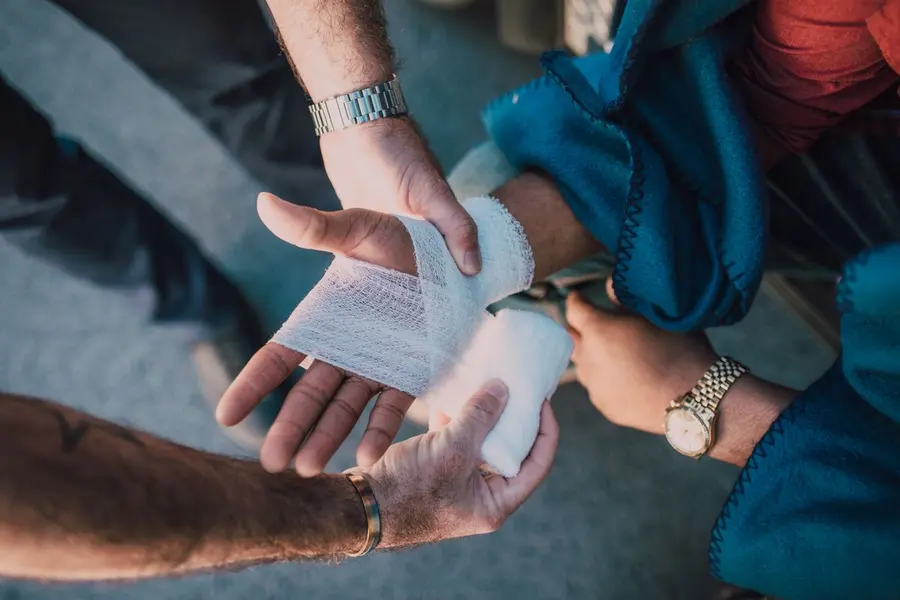
Average burn injuries settlement amounts
Typical range (2026)
$25K – $200K
Severe cases with surgery or permanent impairment can reach $5 million or more.
Burns from vehicle fires, airbag deployment, or road friction are among the most painful injuries and often leave permanent scars. Scarring drives value — especially facial scarring — as juries award heavily for disfigurement, and insurers settle accordingly.
Burn Injuries settlement amounts by severity
Averages hide more than they reveal — a handful of catastrophic outcomes pull every published average upward. Find the band that matches your own treatment instead.
| Severity | What it looks like | Typical range |
|---|---|---|
| First and small second-degree | Superficial burns healing in weeks without grafting, minimal permanent marking. | $15K–$45K |
| Second-degree requiring wound care | Deep partial-thickness burns, extended dressing changes, permanent discoloration. | $40K–$150K |
| Third-degree with grafting | Full-thickness burns, skin graft surgery, donor-site scarring, contracture risk. | $150K–$900K |
| Major burns or facial disfigurement | Large body-surface-area involvement, multiple reconstructive surgeries, permanent visible disfigurement. | $800K–$8M |
Educational ranges compiled from published settlement and verdict reporting. Not a valuation of any specific claim.
Burn Injuries symptoms people report after a crash
- Blistering, charring, or leathery skin at the burn site
- Severe pain, or numbness where nerves are destroyed
- Tightness and contracture as the burn heals
- Permanent color and texture change in the scar
- Nightmares, avoidance, and driving anxiety
How treatment changes what the claim is worth
Each step up this ladder adds documented cost and, more importantly, moves the claim further from the insurer's soft-tissue formula.
Emergency burn assessment
Records degree and total body surface area — the two numbers every valuation starts from.
Burn center admission
Specialist treatment both improves outcomes and documents severity in a way general emergency care does not.
Skin grafting
Adds substantial cost, creates a second permanent scar at the donor site, and establishes that the injury was full-thickness.
Scar management and reconstruction
Pressure garments, laser therapy, and revision surgeries can continue for years. Future reconstructive costs belong in the settlement.
Psychological treatment
Burn injuries carry high rates of PTSD and body-image distress. Documented psychological treatment is separately compensable.
What the insurer will argue about your burn injuries claim
None of these are unusual. Knowing which one is coming is most of the defense against it.
Valuing surface area, not visibility
A small burn on the cheek is worth far more than a larger burn on the thigh, and formula-driven adjusters miss that. Disfigurement damages are about what people see, not square centimeters.
Settling before the scar matures
Scars change for 12 to 18 months, and can worsen with hypertrophy or keloid formation. An early settlement values the scar at its best-looking moment.
Excluding future reconstruction
Burn reconstruction is often staged over years. Without a plastic surgeon's written plan and cost estimate, none of it gets paid.
Ignoring the psychological component
Carriers treat emotional harm as an add-on. In disfigurement cases it is central, and it needs a treating psychologist's records to be valued properly.
What moves your number
- Burn degree and total body surface area
- Visible scarring, especially face and hands
- Skin graft procedures
- Psychological impact (PTSD is common)
Proving a burn injuries claim
Documentation specific to this injury. Burn claims typically settle 18 months to three years after the injury, because scar maturation takes 12 to 18 months and the reconstruction plan cannot be finalized before then.
Burn degree and total body surface area from the treating record
Serial photographs at consistent lighting from injury through maturation
Plastic surgeon's staged reconstruction plan with costs
Psychological treatment records addressing PTSD or body image
Documentation of activities and clothing choices the scarring changed
What to do in the first two weeks
These apply to every injury claim, and each one is a mistake insurers count on.
Get treated within 72 hours, and do not skip visits
Treatment delay and gaps in care are the two most common reasons claims get discounted. If you have to pause treatment for money, work, or childcare, tell the provider so the reason appears in the chart rather than reading as recovery.
Photograph everything while it is fresh
Both vehicles from multiple angles, the scene, road conditions, skid marks, traffic controls, and your visible injuries as they develop. Bruising often looks worse on day three than on day one — photograph it again.
Keep a dated symptom journal
Pain scores, sleep disruption, and specific activities you could not do. Contemporaneous notes carry weight that a recollection twelve months later does not, and they are what make non-economic damages concrete.
Document work impact through your employer
A letter confirming missed shifts, modified duty, or lost overtime turns lost income from an assertion into a provable number.
Decline the early recorded statement
You are not obligated to give a recorded statement to the other driver's insurer. Early statements are taken before symptoms peak and are quoted back for the life of the claim.
Report every symptomatic area at the first visit
Injuries that hurt less at first get mentioned later, and the delay becomes the insurer's causation argument. List everything that hurts, even mildly.
How long a settlement actually takes
Six phases, and the first one is the longest. Nothing can be valued until treatment ends.
Treatment
Weeks to many monthsNothing can be valued until your doctor says you have stopped improving — maximum medical improvement. Settling before that point means paying for your own future care.
Demand package
2 to 6 weeks after treatment endsRecords, bills, wage documentation, and a written demand go to the adjuster. Assembling complete records from every provider is usually what takes the time.
Insurer review
1 to 8 weeksThe adjuster reviews the file, often runs it through claims-evaluation software, and sets an authority range. Complex or disputed claims go to a supervisor or a committee.
Negotiation
2 weeks to several monthsOffers and counters. Straightforward claims resolve in a handful of exchanges; disputed liability or serious injury can take many rounds, and sometimes a lawsuit filing to move.
Release and paperwork
Days to 2 weeksYou sign a release ending the claim permanently. Read it — a broad release can extinguish claims against parties you did not intend to release.
Payment and disbursement
2 to 6 weeksThe check goes to your attorney's trust account. Liens and medical providers are paid first, then fees and case costs, then the balance reaches you. Many states require the insurer to pay within roughly 30 days of the signed release.
Burn Injuries settlement questions people ask most
The questions people actually search for on this topic, answered in full.
How much is a burn injury settlement worth?
Typical burn claims settle between $25,000 and $200,000, with grafted third-degree burns commonly reaching $150,000 to $900,000 and major disfiguring burns settling in the millions. Location and visibility of the scarring matter as much as burn depth.
How much is a facial scar worth in a settlement?
Facial scarring is valued substantially higher than scarring the clothing covers — permanent visible facial disfigurement commonly adds six figures on its own. Juries respond strongly to visible harm, and adjusters price that risk in.
Can I claim for airbag burns?
Yes. Airbag deployment causes friction and chemical burns to the face, chest, and forearms with some regularity. If the airbag deployed defectively or should not have deployed at all, a product liability claim against the manufacturer may also exist alongside the crash claim.
How long should I wait before settling a burn claim?
Until the scar has matured, typically 12 to 18 months, and until a plastic surgeon has produced a written reconstruction plan. Settling earlier means valuing the scar before you know what it will actually look like.
Does a burn settlement include future surgeries?
It should. Burn reconstruction is commonly staged across several years, and each planned stage should be itemized and costed by the treating surgeon so it is compensated rather than assumed.
Can I get compensation for the emotional impact of scarring?
Yes. Disfigurement and emotional distress are recognized categories of non-economic damages, and burn survivors have well-documented rates of PTSD and body-image distress. Treatment records are what make the claim payable rather than merely sympathetic.
What is a skin graft settlement worth?
Grafting typically places a claim in the $150,000 to $900,000 range. A graft means the burn was full-thickness, it creates a second permanent scar at the donor site, and it usually implies contracture risk requiring further surgery.
Do vehicle fire burn claims involve more than the other driver?
Often. Post-collision fires raise questions about fuel-system and battery design, and a product liability claim against the manufacturer can add a defendant with far deeper coverage than the at-fault driver's policy.
Fees, taxes and what you actually take home
The questions people actually search for on this topic, answered in full.
How much does a personal injury lawyer take from a settlement?
Contingency fees typically run 33% to 40%. The common structure is one third if the case settles before a lawsuit is filed, rising to 40% once litigation begins or the case approaches trial. Case expenses — filing fees, records, expert reports — are usually deducted on top of the fee rather than out of it, so ask specifically which structure the agreement uses.
Are personal injury settlements taxable?
Compensation for physical injury or physical sickness is generally not taxable federally. Portions allocated to lost wages, punitive damages, and interest generally are, and previously deducted medical expenses can be taxable when reimbursed. How the settlement is allocated among those categories has real consequences, so it is worth addressing before the documents are signed rather than at tax time.
How much of my settlement do I actually take home?
The order of payment is liens and medical providers first, then attorney fees and case expenses, then you. On a $100,000 settlement with a one-third fee, $4,000 in costs, and $15,000 in medical liens, the net is roughly $48,000 — and lien negotiation is frequently where the largest gains are available, because providers often accept substantial reductions.
How long does it take to get paid after a settlement is signed?
The insurer typically issues the check within two to four weeks of receiving the signed release, and most states require payment within a reasonable period commonly understood as 30 to 45 days. Disbursement to you then depends on how quickly liens are resolved, which can add several weeks.
Should I accept the insurance company's first offer?
Usually not. Industry analysis consistently places first offers at roughly half of a claim's fair value, and adjusters are evaluated in part on savings against reserves. Cases involving a genuine lowball frequently resolve for several times the opening number once the file is properly documented — but the first offer is also final if you accept it, because the release closes the claim permanently.
Do I have to repay my health insurance from a settlement?
In most cases yes. Health insurers, Medicare, Medicaid, and hospitals hold subrogation or lien rights against injury recoveries. Those liens are frequently negotiable — sometimes substantially — and reducing them raises your net recovery dollar for dollar without any further negotiation with the insurer.
Burn Injuries settlements by state
State law changes what an identical injury is worth. Filing deadlines, fault rules, no-fault thresholds, damage caps, and local verdict climates all move the number — sometimes by more than the injury itself does.
Other injury values
Ranges reflect published settlement and verdict data for insured US claims and are educational estimates only — not legal advice or a valuation of any specific claim. InjurySage is not a law firm and does not provide legal representation. Medical and legal information here is general; verify anything that affects a deadline with a licensed attorney in your state. Page updated August 2026.